 Loading Please Wait...
Loading Please Wait...
Loading Please Wait...
You have invested in a website, added your services and shared the link with customers. Perhaps you have tried a few ads too. But enquiries still arrive mainly through personal contacts, and you are wondering what the website is actually contributing.
Publishing a website gives people somewhere to learn about your business. Getting suitable buyers to discover it, trust your offer and contact you takes further work.
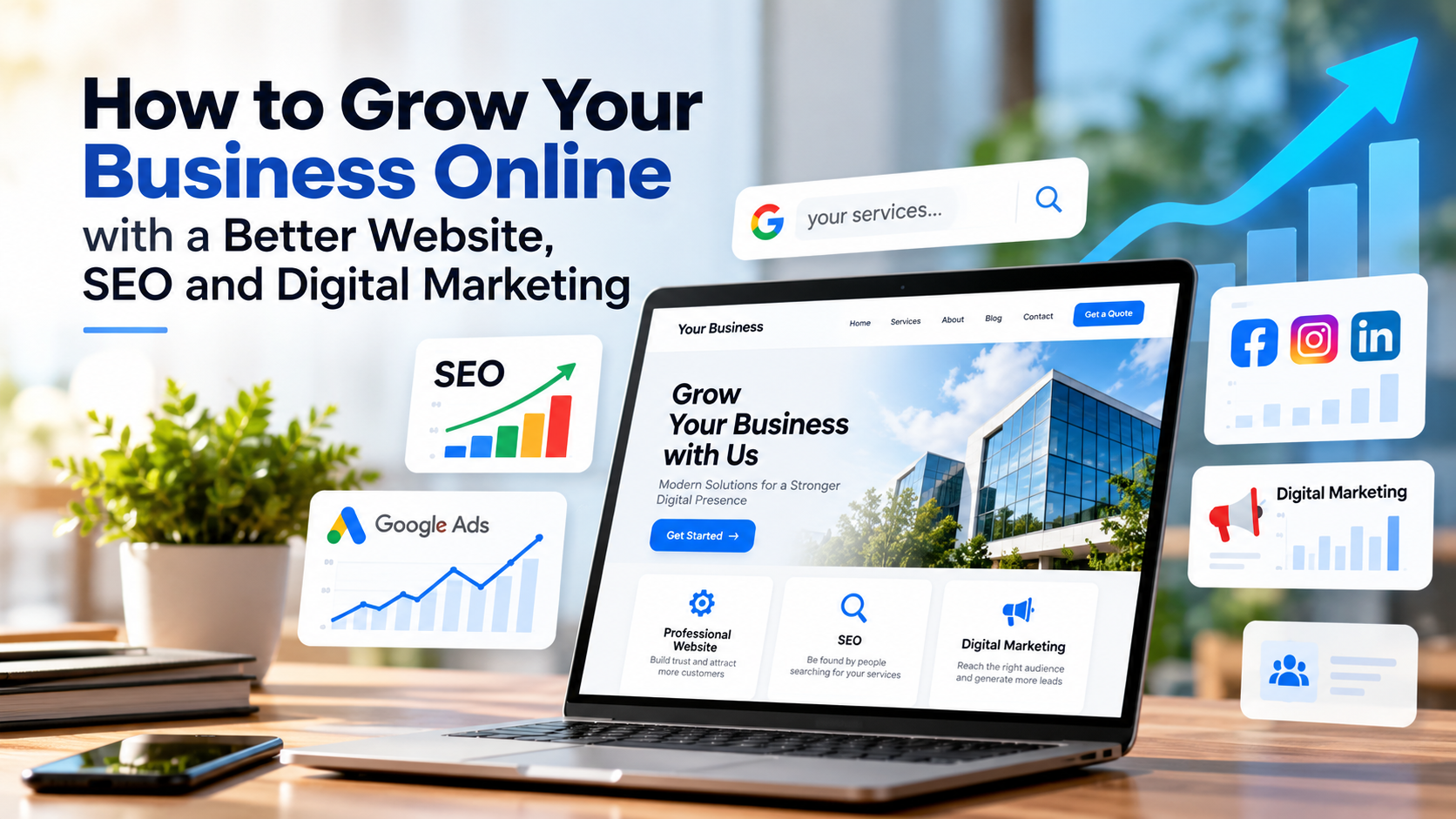
Website improvements, SEO and digital marketing address different parts of that process. When planned together, they can help you reach people beyond your existing network and turn more of that attention into business opportunities.
Before deciding what to spend, identify the problem you need to solve.
If very few relevant people visit your website, examine how customers discover you. If visitors arrive but rarely enquire, review the offer, information and enquiry process. If enquiries come in but seldom become customers, look at lead quality, pricing and follow-up.
These situations call for different actions. Increasing an advertising budget will not repair a broken form. Redesigning a homepage will not automatically create demand for a service.
Ask your team where a potential customer gets stuck between finding you and paying you. That is the starting point for a useful marketing plan.
Imagine an office manager looking for a cleaning contractor. They arrive at your website and see attractive photographs, but cannot tell whether you cover their location or work after office hours.
They may leave with unanswered questions, even if your business is a good fit.
Your main service pages should explain who you help, what the work includes and how someone can take the next step. Where pricing varies, describe what affects the quotation. Include examples of your work and genuine customer feedback relevant to that service.
Then test the experience on a phone. Can someone read the information comfortably, request an estimate and receive confirmation? Check that the enquiry reaches your team.
When comparing website development services, ask how the proposed changes will help customers make decisions. A useful improvement should solve an identifiable problem, such as confusing navigation or a difficult booking process.
Many potential customers do not know your company name. They search for the problem they need solved: an accountant for a small business, a supplier for an event, or someone to repair their website.
Search engine optimisation, or SEO, helps search engines understand your pages and helps people discover relevant information through search.
For a business owner, the opportunity is to be found for services you actually sell. Start by giving important services their own useful pages, describing them clearly and linking related information together. Technical checks can identify barriers that prevent search engines from accessing important content.
SEO also involves understanding the intention behind a search. Someone researching how to clean an office has a different immediate need from someone looking for an office cleaning quotation. Your content should recognise that distinction.
Organic search does not charge you for each click, but SEO still requires time and investment. Visibility can take time to develop, and neither rankings nor sales are guaranteed.
Your sales conversations are a valuable source of content ideas. Write down the questions customers ask before they agree to proceed.
For a website project, those questions might include whether the existing site needs rebuilding, who will write the content and what happens after launch. A useful article can explain the options before the customer speaks to your team.
Be specific enough to help. An article about redesign costs, for example, could explain how the number of pages, content preparation and booking requirements affect the scope. It does not need an invented fixed price.
Connect that article to the relevant service page so readers can explore your support when they are ready. This gives educational content a clear purpose within the buying journey.
It also creates material your team can share in follow-up emails and social posts, rather than repeatedly writing the same explanation.
SEO develops your opportunity to appear in unpaid search results. Google Search ads provide a paid route to people looking for relevant products or services.
A focused campaign can help you test demand for a particular offer. You can decide which service to promote, the area you want to reach and the budget available for the test. Paid visibility can begin sooner than building organic rankings, although profitable results still require testing.
The destination matters. An ad promoting after-hours office cleaning should lead to information about that arrangement. A general homepage filled with unrelated services makes the prospect do extra work.
Ask a Google Ads agency how it will evaluate search terms, reduce irrelevant traffic and measure useful enquiries. Discuss the landing page as well as the campaign settings.
Paying for traffic is worthwhile only when the resulting opportunities make commercial sense for your business.
Some customers discover a business while browsing, before they actively search for a supplier. Social content gives you space to demonstrate your work and explain your approach.
A short video showing a finished installation, a practical product demonstration or an explanation of your process can answer questions that a promotional slogan cannot.
Choose content around what buyers need to see. An ecommerce business might demonstrate product use and sizing. A professional service firm might explain a common mistake and how customers can avoid it.
Paid social campaigns can distribute selected messages beyond your current followers. Their value depends on the audience, offer and quality of the response, so treat early spending as a test.
Likes and comments may indicate interest. Check whether that interest develops into relevant conversations or purchases before calling a campaign successful.
Consider a hypothetical cleaning company that wants more office contracts.
Its website initially groups every service into one short page. The company creates a detailed office-cleaning page covering working hours, service areas, the quotation process and suitable customer reviews.
Its SEO work helps clarify that service for search. A useful article explains what office managers should prepare before requesting a cleaning quotation.
A search campaign promotes the service to prospective buyers in the areas the company covers. Social posts demonstrate the team's process using images shared with permission. Each message directs interested people towards relevant information.
When enquiries arrive, the team checks suitability and follows up. It then reviews which sources produced genuine opportunities.
This is an illustration, not a claim about a particular client's results. It shows why a website, search content, advertising and sales follow-up need to support the same business goal.
A monthly report should help you decide what to do next. Ask how many suitable prospects enquired, which services interested them and how many eventually became customers.
Keep early actions separate from confirmed outcomes. Clicking a phone number does not prove a call connected, and tapping WhatsApp does not prove a message was sent.
For paid campaigns, compare spending with qualified enquiries and resulting sales. For SEO, review relevant search visibility and organic enquiries together. For ecommerce, examine completed orders and their value.
Avoid drawing conclusions from a handful of visits or one unusually good week. Consider your sales cycle, seasonal demand and any changes to the offer when comparing periods.
You do not need to launch every marketing channel at once. Begin with one commercially important service, make its website page useful and decide how suitable buyers will discover it. Expand when the evidence supports the next investment.
A provider that understands both development and marketing can help coordinate that work. The people improving the page need to understand the campaign, and the people running the campaign need to understand the enquiry process.
AllUpNext IT Solutions LLP offers WordPress, Shopify and WooCommerce development, website maintenance, SEO, PPC management and social media marketing. These services give business owners an option to discuss their website and marketing needs with one team.
If you are unsure where to begin, bring your website address, priority services and current enquiry figures to the conversation. Those details provide a useful starting point for discussing scope and priorities.
Visit AllUpNext to discuss how website improvements, SEO and digital marketing could support your business goals. Build your plan around the customers you want to serve and the results you need to measure.