 Loading Please Wait...
Imagine you run a cleaning company. Customers appreciate your work, your team has capacity, and your website explains your services. Yet your booking calendar still has gaps.
You decide to invest in online marketing, but the advice pulls you in two directions. Some recommend advertising to generate enquiries sooner. Others suggest improving your website’s organic search presence.
Which deserves your budget first?
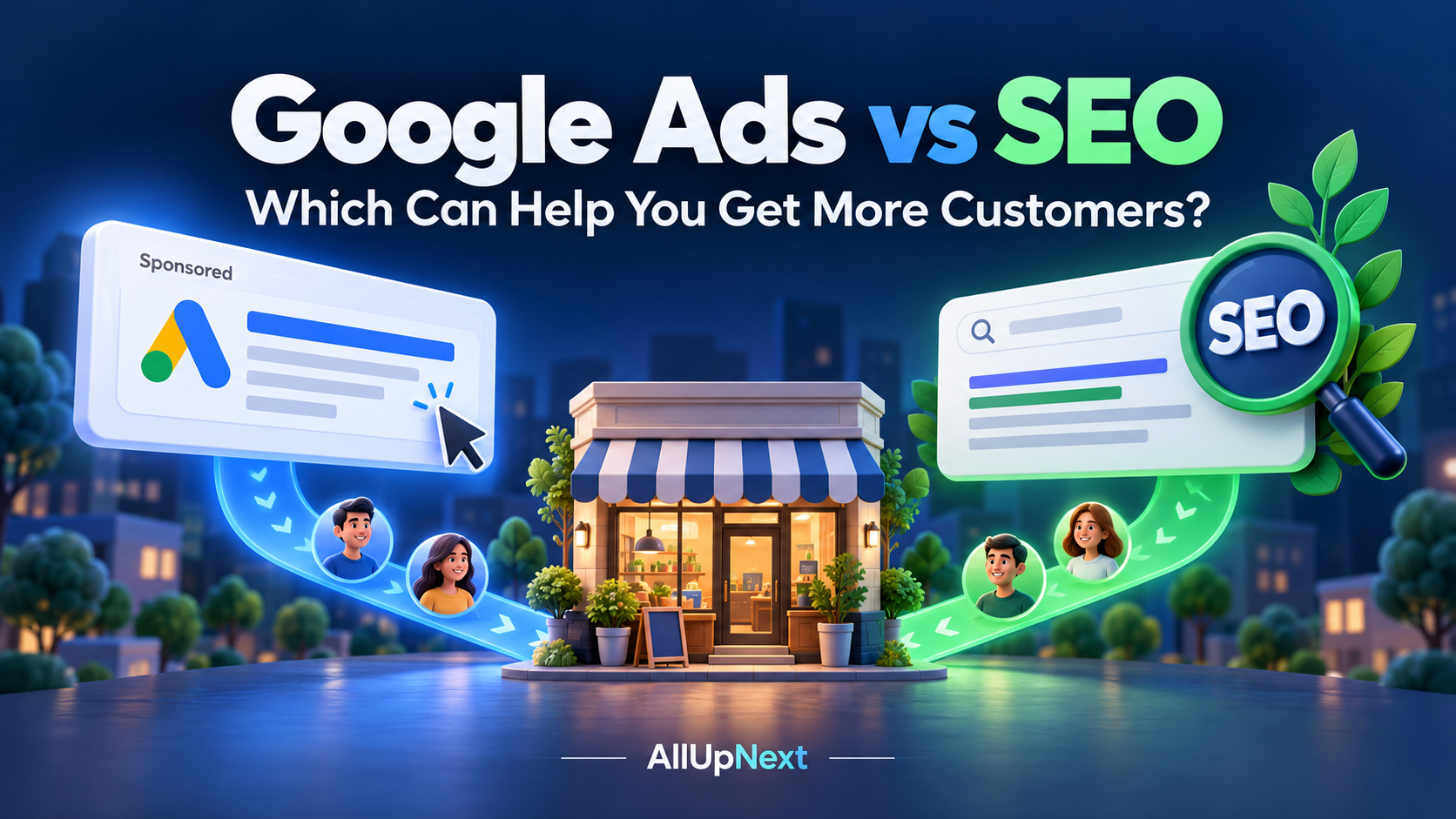
Google Ads can help you test demand through paid search, while SEO builds your opportunity to attract relevant organic visitors. The right starting point depends on your urgency, available resources and ability to turn enquiries into sales.
Here is how that decision works in practice.
With Google Search advertising, your business competes for sponsored placements associated with relevant searches. In a typical pay-per-click campaign, you are charged when someone selects your advertisement.
SEO focuses on your unpaid search presence. It involves improving website information, resolving technical problems and making pages easier to understand and navigate.
For example, an office manager needs a cleaning contractor for a newly leased workplace in Melbourne. They search online to compare providers.
Your company might appear through an advertisement or an organic service page. Either route could bring the manager to your website.
What happens next matters just as much. They need to confirm that you cover their location, handle commercial properties and offer a straightforward quotation process. Without those answers, they may contact another provider.
Suppose a furniture retailer introduces compact dining tables. Advertising could promote the range to people searching to buy. SEO work could improve the collection page with dimensions, material details and advice for smaller rooms.
Both support the same commercial goal through different methods.
| Consideration | Google Search Ads | SEO |
| Initial visibility | Can begin after approval and campaign launch | Develops as improvements take effect |
| Main expenses | Advertising, management and landing page work | Content, technical improvements and ongoing support |
| Testing | Can test offers through paid traffic | Requires time to evaluate organic progress |
| Control | Campaign settings guide targeting and spending | Search engines determine organic placements |
| Continuity | Paused campaigns stop serving ads | Existing visibility may continue but can change |
Organic clicks carry no advertising charge, but SEO still requires time, skills and investment.
Google Ads may suit a business with available capacity, a specific offer and money set aside for testing.
Ahead of the warmer months, an air conditioning installer notices several unbooked appointments.
The company could advertise installation services within the locations it serves. Visitors would arrive on a dedicated page explaining installation options, relevant experience and how to arrange an assessment.
That page gives searchers a direct route toward an enquiry.
Sending the same visitors to a broad homepage could create confusion, especially if installation information is buried beneath unrelated services.
Before launching, the company should check that:
The campaign needs regular review. Searches about DIY installation or employment might attract clicks without producing suitable customers.
The aim is to secure worthwhile jobs at a sustainable acquisition cost.
SEO deserves attention when prospective customers cannot find enough useful information about your business.
A catering company wants more office lunch bookings. Its website, however, contains only a short menu and a telephone number.
An office manager has unanswered questions: How many people does each package serve? Are vegetarian options available? Where does the company deliver? How early should an order be placed?
Improving the corporate catering page would address these practical concerns. Genuine photographs and customer feedback could help buyers assess the service.
Supporting articles could then explain how to estimate portions or organise lunch for a team with different dietary requirements.
This creates a clearer path from research to enquiry.
SEO takes patience. Website changes may be reflected in search at different speeds, and meaningful commercial progress cannot be promised within a fixed period. Competition, website condition and the quality of the work all affect results.
Compare the cost of acquiring customers with the value those customers contribute.
Consider this hypothetical advertising campaign:
The combined expense is £800.
£800 divided by four customers equals £200 per customer.
Now suppose each completed job leaves £700 after delivery costs, before marketing expenses. Deducting £200 for acquisition leaves £500 toward overheads and profit.
If a job leaves only £100 before marketing, acquiring it for £200 creates a shortfall.
SEO should receive the same scrutiny. Include writing, technical work and professional support when assessing its costs.
Evaluate organic enquiries over an appropriate period rather than expecting newly improved pages to perform immediately. For businesses with longer sales cycles, follow leads through to completed sales before drawing conclusions.
Google Ads and SEO can inform each other when managed around the same customer needs.
A website development company advertises ecommerce migration services. Several prospects ask whether their product information and existing website addresses can be preserved during the move.
Those conversations reveal an information gap.
The company can improve its migration page, explain the planning involved and publish a useful preparation guide. Future visitors can then find answers before contacting the team.
Advertising helps test demand and messaging. SEO supports the development of useful pages that may attract organic interest.
However, purchasing advertisements does not directly increase organic rankings. The benefit comes from applying what you learn to improve your website and customer experience.
A repair company with available appointments and a strong service page might begin with a controlled advertising test.
A consultancy with vague service descriptions and limited organic visibility might first improve its website and develop relevant content.
Before choosing, ask:
AllUpNext can help review your website, advertising requirements and SEO opportunities, then plan an approach around your goals and available budget.
Measure progress through qualified enquiries, sales and acquisition costs. Those figures reveal whether your marketing is helping the business grow.
Not automatically. SEO needs resources, while advertising requires a testing budget. Compare the full investment and resulting customer value rather than judging either channel by its initial price.
Yes. Begin with a clear objective and reliable tracking. Add the second channel when your budget and capacity allow you to manage both effectively.