 Loading Please Wait...
Loading Please Wait...
Loading Please Wait...
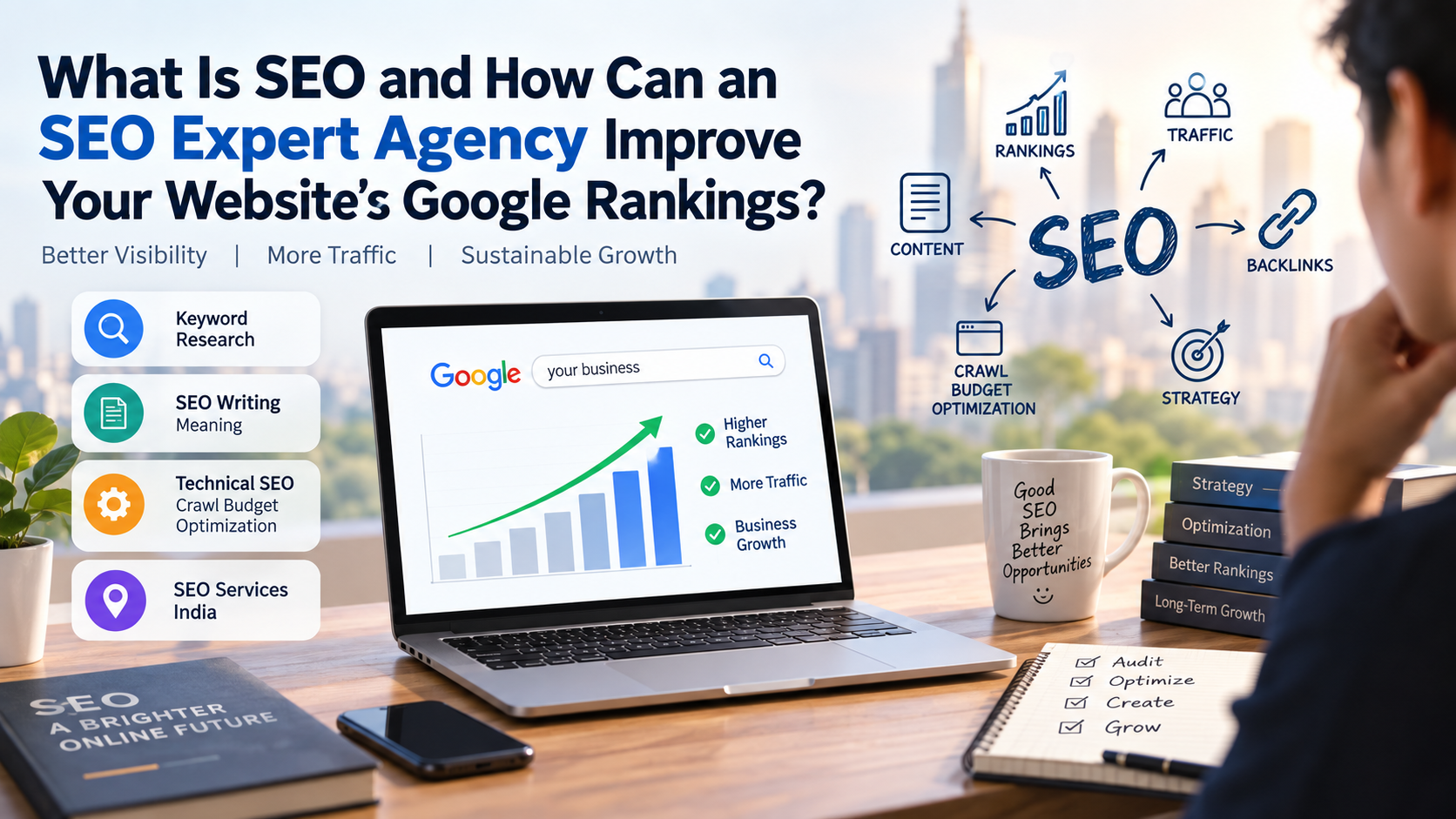
Having a website isn't enough on its own to bring in customers anymore. It needs to actually show up when people search for the products, services, or information your business offers — and that's the job of Search Engine Optimization, or SEO.
At its core, SEO is about shaping a website so search engines can understand what it offers, judge how relevant it is to a given query, and surface it for the right searches. Get it right, and a business can see steadier visibility, more qualified traffic, and growth that compounds over time instead of fading the moment ad spend stops.
Not every business has the time or in-house skill to manage this alone, which is why many turn to an SEO expert agency — bringing in the technical know-how, content planning, and ongoing tuning that real SEO progress requires.
SEO — Search Engine Optimization — is the practice of optimizing a website so it ranks better on search engines like Google.
It's more than sprinkling keywords across a page. Search engines weigh a whole mix of signals: how relevant the content is, how the site is structured, how the page performs for users, how well pages link to each other, whether the technical side is sound, and ultimately, how useful the content actually is.
A solid SEO strategy usually touches on:
The end goal is simple to state, if not always simple to execute: build a site that's genuinely useful to visitors and easy for search engines to crawl, read, and index.
When someone needs a product, a service, or just an answer, a search engine is usually the first stop. If your site isn't showing up for those searches, the traffic — and the customers — go to whoever does show up instead.
Done well, SEO can help a business:
Unlike paid ads, SEO builds visibility that doesn't disappear the moment you stop paying for it. That said, it's not a one-and-done project — algorithms shift, competitors adjust, and user behavior evolves, so rankings move too.
An SEO expert agency works with businesses to build and run a strategy aimed at improving organic search performance.
What that looks like in practice depends on the site and the goals, but most agencies start with an audit — digging into the technical, content, and structural issues holding a site back.
This is about figuring out what people actually type into Google when they're looking for what you offer.
A company offering digital marketing services, for instance, might target phrases tied to SEO services, technical SEO, local SEO, and SEO content.
But it's not just about chasing high search volume. A good keyword strategy also weighs:
That's what lets an agency build content and landing pages that actually match what people are searching for — not just what looks good on a keyword report.
Technical SEO is about the plumbing — making sure search engines can crawl and understand a site without friction.
An agency will typically look at things like:
This matters even more on large sites — when you're dealing with thousands of URLs, it gets a lot harder for search engines to figure out which pages actually deserve priority.
Crawl budget optimization is about making sure search engine crawlers spend their limited time and resources on the pages that actually matter.
Google's crawlers work through websites discovering URLs, but large sites often accumulate a lot of dead weight — duplicate pages, URL parameters, filtered views, outdated pages, chains of redirects. When there's too much of that clutter, an SEO specialist will typically dig into the site's crawl and indexing data to spot where things can be cleaned up.
That cleanup work can include:
The point is to make it as easy as possible for search engines to find — and keep coming back to — the content that actually matters.
Worth noting: crawl budget is mostly a large-site concern. If you're running a smaller website, you probably don't need to worry about this unless you're already seeing specific crawling or indexing problems.
If you've come across the term SEO writing and weren't quite sure what it meant — it's writing content that's genuinely useful to readers, while also being structured in a way that helps search engines understand what it's about and how relevant it is.
It's not about cramming the same keyword into a page over and over. That approach usually backfires — it makes the content harder to read and creates a worse experience for the very people you're trying to reach.
Good SEO writing comes down to a few habits:
Take the phrase "SEO services India" as an example — instead of repeating it mechanically throughout an article, a writer can talk naturally about the SEO options available to businesses in India and let the keyword land where it actually fits.
Written this way, content ends up working for both the reader and the search engine — not just one or the other.
It's a mistake to treat technical SEO and content as separate tracks.
A site can have genuinely great content, but if the important pages aren't getting discovered or indexed properly, that content may never get the visibility it deserves.
The reverse is just as true — a technically flawless site won't generate much organic traffic if the content on it doesn't actually answer what people are searching for.
A strong SEO strategy has to work on both fronts at once.
Technical SEO — makes pages accessible and easy to understand.
SEO writing — delivers content that's genuinely relevant and useful.
Internal linking — helps both users and crawlers find related pages.
Keyword strategy — connects content to what people are actually searching.
Performance analysis — flags where there's room to keep improving.
Demand for SEO services India keeps climbing as more businesses compete for visibility in organic search.
Depending on their model, Indian businesses might use SEO to reach local customers, a national audience, or international markets.
A professional SEO engagement usually covers:
The right mix depends on the site's current state, the industry, the competitive landscape, the audience, and what the business is actually trying to achieve.
A good SEO agency doesn't run the same checklist on every client. It starts by understanding the specific site and figuring out where the real opportunities are.
The agency digs into the site to find technical errors, content gaps, indexing issues, broken links, duplicate content, and anything else holding performance back.
Relevant keywords and competing sites get analyzed to understand what people are searching for and how well competitors are meeting that demand.
Page titles, headings, URLs, content, images, internal links, and metadata all get reviewed and tightened up where it makes sense.
New content gets built to target the right queries and fill gaps the existing pages don't cover.
Whatever's getting in the way of crawling, indexing, site structure, or user experience gets identified and fixed.
Performance gets tracked through search and analytics data, and the strategy gets adjusted from there — doubling down on what's working and fixing what's underperforming.
SEO rarely delivers overnight results. How long it takes depends on a mix of factors:
Some gains show up fairly quickly. Others — especially around competitive keywords — take real, sustained effort. The smarter mindset is to aim for durable, long-term improvement rather than expecting a quick jump to page one.
SEO isn't one thing — it's the combination of technical optimization, genuinely useful content, thoughtful keyword targeting, solid site structure, and ongoing refinement.
An experienced SEO expert agency can help a business spot technical issues, sharpen its content, clean up crawling and indexing, and build a strategy around its actual goals.
From crawl budget optimization and technical SEO to understanding what SEO writing really means and choosing the right SEO services India partner — every piece of the strategy should serve one purpose: helping people find genuinely useful information, and making it easier for search engines to understand your site along the way.
If your site isn't pulling its weight in organic traffic, a structured SEO strategy is usually the fastest way to figure out what's holding it back — and where the real opportunities are.
SEO stands for Search Engine Optimization. It's the practice of improving a website's content, technical structure, and overall visibility so it attracts more relevant organic traffic from search engines.
An SEO expert agency helps businesses improve their organic search performance through services like keyword research, technical SEO, content optimization, on-page SEO, internal linking, and ongoing performance monitoring.
It's the process of improving a site's structure and URL management so search engine crawlers can efficiently find and revisit the pages that matter most.
It means writing content that's genuinely useful and readable, satisfies what the searcher is actually looking for, and naturally incorporates relevant keywords, headings, and internal links along the way.
Yes. Small businesses can use SEO to build visibility for local or industry-specific searches. The right strategy just needs to be shaped around the business's audience, competition, website, and goals.