 Loading Please Wait...
Loading Please Wait...
Loading Please Wait...
Had coffee with a security company owner yesterday. He's been in business fifteen years, runs about 80 guards across various sites. I asked how he knows what his guards are doing right now at this moment. He laughed nervously and said "I guess I don't, really."
Then he stopped laughing. Realized he's running a multimillion-dollar operation with zero real-time visibility into operations. Paying guards he can't verify are working. Billing clients for services he can't prove are happening. Managing emergencies by calling guards and hoping they answer.
That's most security companies in 2025. Flying completely blind, hoping nothing goes catastrophically wrong before they figure out they need actual monitoring systems. Some get lucky for years. Others learn the expensive way when a client incident exposes the fact that nobody knows what's actually happening.
Let me break down what running a security company without a proper monitoring system actually costs you. Not hypothetical future costs—money you're losing right now.
Guards padding time sheets by 15 minutes per shift. Seems minor until you multiply it across all guards and all shifts. That's thousands per month in overpayment that accurate monitoring would catch immediately.
Guards showing up late or leaving early without anyone noticing. You're billing clients for coverage they're not getting. When clients eventually discover this—and they will—you lose the contract plus your reputation takes a hit.
Guards sitting in their cars instead of actively patrolling. You think you're providing mobile patrols. Clients think they're getting mobile patrols. Reality is guards found comfortable parking spots and your lack of monitoring enables it.
Emergency situations where you can't locate guards quickly. Every minute wasted figuring out where someone is could matter when they need backup or when a client facility needs immediate response.
Add it all up and you're probably hemorrhaging 10-15% of revenue through operational inefficiency that monitoring systems would eliminate. Not theoretical savings—actual money you're losing monthly.
Running security operations on trust is expensive. You trust guards are showing up. Trust they're doing their jobs properly. Trust they're honest about hours worked. Trust they'll report problems immediately.
Most guards deserve that trust. But you're paying a "trust tax" for the minority who don't. The guard who clocks in remotely then arrives 30 minutes late. The one who leaves an hour early but submits a full timesheet. The one who reports eight-hour shifts but actually worked six.
Without monitoring systems, you can't tell the difference between guards who deserve trust and those exploiting it. So you either trust everyone and accept losses from dishonest guards, or you don't trust anyone and create hostile work environment with good guards.
Security guard monitoring systems eliminate the trust tax. You're not trusting anyone or mistrusting everyone—you're verifying everything. Good guards appreciate it because it proves they're doing quality work. Problem guards get caught quickly and either correct behavior or leave.
Your best guards shouldn't resent monitoring. They should welcome it as validation of their professionalism. If someone strongly opposes being monitored, that tells you something important about whether they've been earning their paychecks.
Traditional security operations work like this: guards work shifts, supervisors hear about problems after the fact, managers review yesterday's activities this morning. You're constantly reacting to information that's hours or days old.
Guard didn't show up for their shift? Find out when the next guard arrives and mentions it. Guard encountered a security issue at 2am? Hear about it at 8am when they submit their report. Guard got injured during patrol? Discover it when someone notices they haven't checked in.
Security guard monitoring systems provide real-time operational visibility. You know immediately when guards clock in late or don't show up at all. See security incidents as they're reported, not hours later. Get emergency alerts the instant guards signal for help.
This changes everything about how you run operations. Coverage gaps get filled immediately instead of going unnoticed. Security issues get escalated while situations are active rather than discovered later. Guard emergencies trigger instant response instead of delayed reaction.
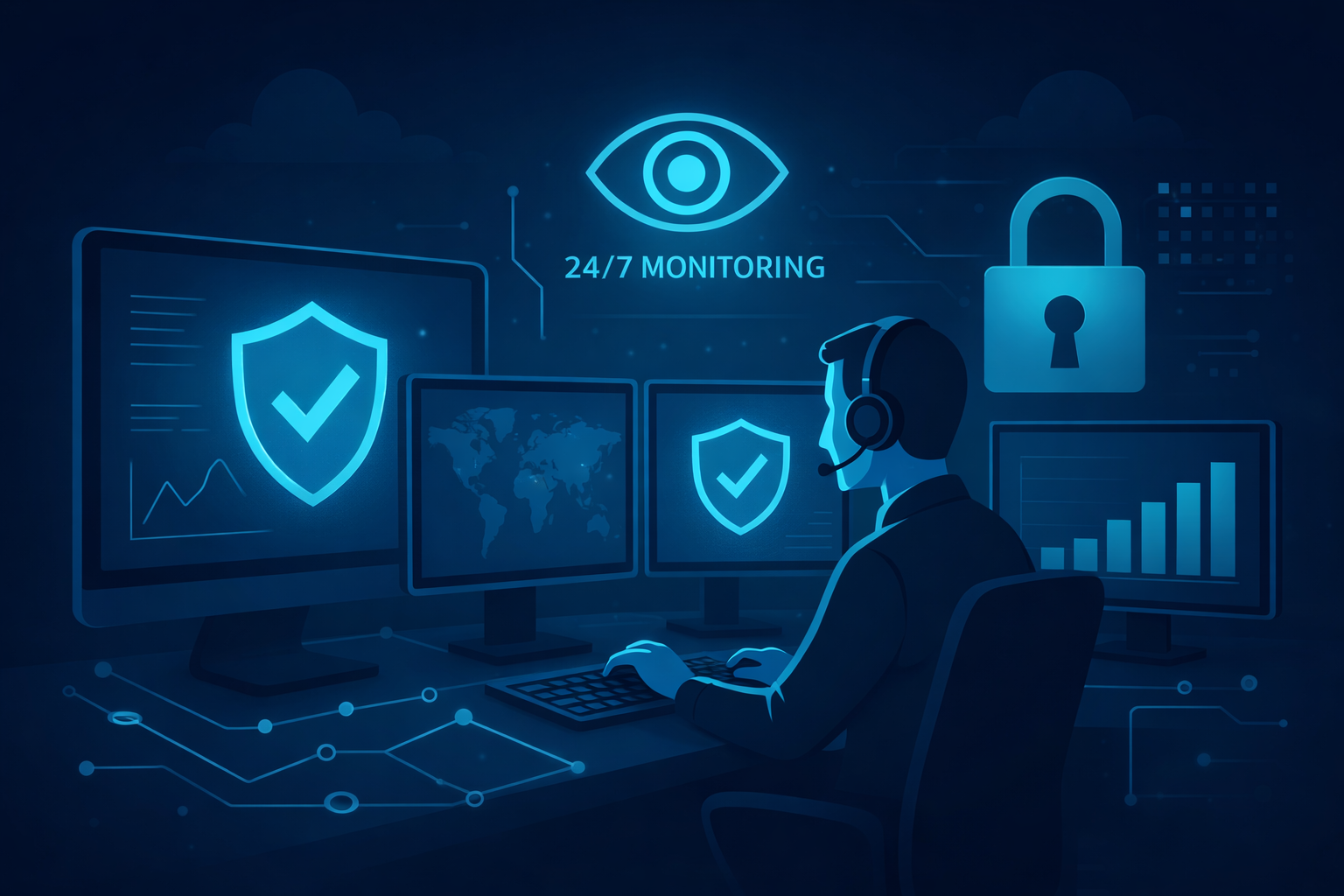
AllUpNext builds monitoring systems with real-time dashboards showing all active shifts, current guard locations, recent activity, and any alerts requiring attention. Not reviewing what happened yesterday—managing what's happening right now.
The difference between real-time and historical monitoring is like driving by watching your mirrors versus looking out the windshield. One shows where you were. The other shows where you're going and lets you avoid problems before hitting them.
Lots of security companies use GPS tracking apps. Guard carries a phone with location enabled. Supervisor can see where they are. Seems like monitoring until you realize how little that actually tells you.
GPS dot on a map shows approximate location. Doesn't show what guard is doing. Doesn't verify they're actively working versus sitting in their vehicle. Doesn't prove they walked patrol routes or checked specific areas. Just shows they're somewhere.
Real security guard monitoring systems use GPS intelligently. Track movement patterns, not just current location. Record trails showing actual paths taken. Compare routes against expected patrol patterns. Identify when guards are stationary too long or moving in ways that don't match assigned duties.
Also verify locations at key moments. Clock-in location proves guards are actually on-site when shifts start. Clock-out location confirms they stayed until shift completion. Break locations ensure guards are taking authorized breaks in appropriate areas.
But GPS monitoring has to balance operational needs against practical constraints. Track too frequently and you kill phone batteries. Track 24/7 and you're invading privacy outside work hours. Track without guard knowledge and you create legal liability.
We build monitoring systems with transparent GPS tracking during work hours only. Guards know monitoring is active when they clock in. Location data is used for operational management and safety, not invasive surveillance. Battery drain is minimized through intelligent polling.
Guards should view GPS monitoring as safety protection, not intrusive oversight. If something goes wrong, you can locate them immediately and send help. That's valuable for guards working alone at remote sites or during overnight shifts.
Manual monitoring doesn't scale. One supervisor can maybe watch 10-15 guards effectively. Beyond that, things slip through cracks. Problems get noticed late or not at all.
Security guard monitoring systems automate surveillance of routine operations. Computer watches everything, alerts humans only when attention is needed.
Guard scheduled to clock in at 8pm. System waits until 8:05pm. No clock-in yet? Alert fires to supervisor. Guard either running late and needs reminder, or forgot shift entirely and backup needs dispatching. Either way, supervisor knows immediately instead of discovering it hours later.
Guard hasn't moved in 90 minutes during scheduled patrol shift. System sends alert. Maybe guard is injured. Maybe they're sleeping. Maybe GPS is malfunctioning. Whatever the cause, supervisor investigates immediately instead of discovering the problem at shift end.
Guard triggers emergency panic button. System immediately alerts all supervisors, displays guard's exact location, logs the emergency with timestamp. Response happens in seconds, not minutes.
These automated alerts free supervisors from constant manual monitoring while catching problems faster than humans watching dashboards ever could. Computers don't get distracted, don't miss subtle patterns, don't need breaks.
We design alert systems with adjustable sensitivity. Some clients want immediate notification for any deviation. Others prefer alerts only for significant issues. Configure monitoring systems to match your operational style and priorities.
Guard working alone encounters a threatening situation. Intruder who shouldn't be on property. Medical emergency. Personal safety threat. They need help immediately.
Without monitoring systems, guards call or text supervisors hoping for quick response. But what if guard can't safely make a call? What if they're incapacitated and can't communicate? What if they're in an area with no cell signal?
Security guard monitoring systems include panic button functionality. One tap triggers emergency alert showing guard's exact GPS location, current assignment, and emergency status. All supervisors get notified instantly with actionable information.
System also logs everything. When did emergency start? Who responded? How long until resolution? What actions were taken? Complete documentation for insurance, legal, and operational review purposes.
This is literally life-saving functionality. Guard having a medical emergency at a remote site at 3am. Without monitoring and panic button, help might not arrive until someone notices they haven't checked in. With proper systems, emergency response happens immediately.
Even beyond actual emergencies, panic buttons provide peace of mind. Guards feel safer knowing they can summon help instantly if needed. That's worth something for employee morale and retention in an industry with notoriously high turnover.
How many hours did your guards actually work last pay period? If you're relying on self-reported timesheets, the answer is probably "somewhat less than what you paid them for."
I'm not saying all guards are dishonest. Most aren't. But humans round up. They estimate generously when tracking their own time. They "forget" when they arrived late or left early. Not necessarily malicious—just human nature when self-reporting.
Security guard monitoring systems eliminate self-reported attendance. Automated clock in with GPS verification shows exactly when and where guards started shifts. Automated clock out shows exactly when shifts ended. System calculates hours worked with zero room for estimation or generosity.
Guard worked 7 hours 43 minutes? That's what gets logged and paid. Not 8 hours because they rounded up. Not 7.5 hours because they estimated. Exact time down to the minute.
This accuracy saves serious money. Across all guards and all shifts, timesheet rounding probably costs you thousands monthly. Automated tracking eliminates that waste while being fairer to guards who actually work full shifts and don't appreciate others padding time.
Attendance tracking also reveals patterns. Guard consistently clocking in 10-15 minutes late? You see it clearly in data and can address it. Guard regularly leaving early? Pattern is obvious instead of hidden in manual timesheets.
We integrate attendance data directly with payroll systems so hours flow automatically from monitoring to paychecks. No manual data entry. No transcription errors. Just accurate hours paid based on verified work.
What did your guards actually do during their shifts? Without monitoring systems, you have vague reports and self-descriptions. "Patrolled the property. Everything was normal." Great, but what does that mean specifically?
Security guard monitoring systems log all activity automatically. When guards clocked in. Where they went during shifts. What checkpoints they scanned. What incidents they reported. When they took breaks. When they clocked out.
This creates comprehensive activity records useful for multiple purposes. Client asks what happened during a specific shift? Pull exact logs showing everything guards did with timestamps and locations. Dispute about whether certain areas were checked? GPS trails and checkpoint scans provide proof.
Activity logging also enables performance management based on data instead of subjective opinions. Which guards consistently complete all assigned checkpoints? Which ones frequently miss areas? Which guards report the most incidents versus which ones report nothing ever? All visible in monitoring data.
This isn't about micromanagement—it's about having factual basis for evaluating performance. Guard claims they do thorough patrols, but monitoring shows they rush through routes in half the expected time. That's a training conversation backed by data instead of supervisor gut feeling.
We build activity logging that captures meaningful actions without creating overwhelming data noise. The goal is useful operational intelligence, not just database bloat that nobody reviews.
Your clients don't want stories about security services. They want proof they're getting what they pay for. Traditional reporting provides summaries and assurances. Modern clients demand verification.
"Our guard patrolled your facility four times overnight." Okay, but how do you know? "Guard logged patrol times in our system." So you're asking clients to trust self-reported data?
Security guard monitoring systems generate reports with actual evidence. GPS trails showing exact routes walked. Checkpoint scans proving specific areas were inspected. Photos documenting conditions found. Incident reports with timestamps and locations.
This transforms client reporting from "trust us" to "here's proof." That's worth premium pricing because verified services are objectively more valuable than unverified promises.
We build automated client reporting into monitoring systems. Daily or weekly summaries generated automatically, pulling relevant data, formatting professionally, delivered on schedule. Clients get transparency without you spending hours compiling reports manually.
Some clients want portal access to see data directly. Others prefer scheduled reports. Some want immediate incident notifications. Flexible reporting lets you provide what each client values most.
Security guard monitoring systems shouldn't be isolated tools requiring constant data transfer. They need to integrate with scheduling, payroll, billing, communication—everything else running your business.
Guard completes shift logged in monitoring system. Hours should flow automatically to payroll. Billing data should update showing completed services. Schedule should mark shift as fulfilled. Client reports should incorporate monitoring data.
Most off-the-shelf monitoring systems offer limited integrations with popular platforms. What about your specific scheduling tool, accounting software, or communication system? Probably not supported, leaving you manually transferring data.
Custom security guard monitoring systems integrate with whatever tools you actually use. AllUpNext builds APIs connecting your specific systems. Monitoring becomes the operational hub making all your tools work together instead of being yet another separate system requiring manual attention.
This integration saves massive amounts of administrative time while eliminating errors from manual data entry. Every time humans transfer data between systems, mistakes happen. Automation eliminates those errors while freeing staff for higher-value work than data entry.
Should you buy off-the-shelf security guard monitoring systems or build custom? Depends on your operation, growth plans, and specific needs.
Off-the-shelf makes sense if you're small, have straightforward requirements, and existing products fit well. Lower upfront cost, faster implementation, adequate functionality for basic needs.
Custom development makes sense if you're growing, have complex requirements, need specific integrations, or want competitive differentiation through superior monitoring capabilities. Higher initial investment but delivers exactly what you need.
Many security companies start with off-the-shelf and switch to custom when limitations become expensive. Problem is you've paid for software you're replacing plus custom development costs. Better to evaluate honestly upfront.
AllUpNext helps security companies assess whether existing tools meet needs or whether custom monitoring systems make business sense. Sometimes the answer is "work with what you have." Sometimes it's "custom development pays for itself within months through operational improvements."
You're running a security business without knowing what's actually happening in real-time. Guards you can't verify are working. Services you can't prove are delivered. Emergencies you'd respond to slowly because you can't locate guards quickly. Money you're losing through timesheet padding and operational inefficiency.
That's not sustainable when competitors offer verified services with complete monitoring. Not safe when guard emergencies could happen without you knowing quickly. Not profitable when operational losses add up to thousands monthly.
Security guard monitoring systems aren't surveillance state micromanagement. They're operational visibility, safety protection, and service verification. Good guards appreciate monitoring that validates their professionalism. Clients value transparency that proves service delivery.
AllUpNext builds custom security guard monitoring systems for companies ready to move beyond hope and trust into operations.